Kamchatka Red King Crab
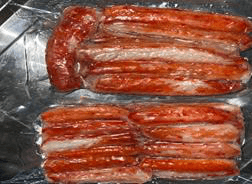
King Crab Second Phalanx
The second phalanx is the leg section below the merus: shorter and slightly finer, but the same king crab meat. When the crab is an ingredient rather than the centrepiece, it is the best-value cut on the list.
- Format
- 6–10 cm sections, shell-free
- Condition
- Cooked, frozen at origin, held at −18°C
- Origin
- Kamchatka fishery, North Pacific
- Servings
- Shell-free; plan by plated weight rather than as-bought weight
Pricing on request — availability confirmed against the weekly landing list.
Where second phalanx earns its place
Good fibre, slightly finer than merus, in 6–10 cm sections. It does not plate as the single statement piece merus does, which is exactly why it costs less.
Salads, pasta, gratin and plated mains where the crab is folded through a dish rather than presented whole.
Agreeing substitutions in advance
In a quota-managed fishery, second phalanx is the usual substitute when merus is short. Agree in advance — in the supply arrangement, not on the day — whether that substitution is acceptable and at what adjusted price.
Best for
- —Salads and pasta
- —Gratin and baked dishes
- —Plated mains at a lower cost per cover
Questions buyers ask
Which king crab cut is best value?
Second phalanx. It is the same meat as the merus in a less uniform, shorter format, at a lower price — excellent when the crab is an ingredient rather than the centrepiece.
What is the difference between a phalanx and a merus?
The merus is the first phalanx — the thickest leg section nearest the body. The second and third phalanges are the shorter, thinner sections below it.
How do I thaw second phalanx?
Slowly, in the refrigerator, then keep it at 0–2°C and use it the same day or the next. King crab arrives cooked, so it only needs gentle reheating — or none, for a salad.
Buyer’s guides
- King Crab Cuts Explained — Merus, Clusters, Claw
- How to Cook King Crab at Home
- How to Store King Crab — Freezer, Fridge and After Thawing